Showing posts with label Thierry Meyssan. Show all posts

Friday, February 7, 2020

PT -- Thierry Meyssan -- O “Acordo do Século”

O “Acordo do Século”

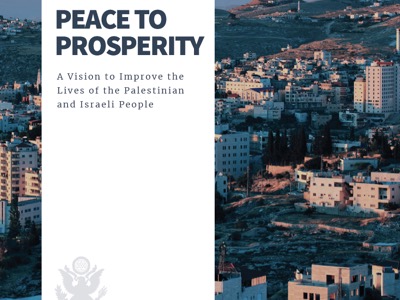
O documento divulgado esta semana pela Casa Branca, Peace to Prosperity, deve ser tomado pelo que é: uma proposta de trabalho sobre novas bases, não um plano de paz definitivo. Para Thierry Meyssan, em vez de protestar contra este projecto, é necessário examiná-lo. É uma oportunidade para desbloquear uma situação que apodrece há três quartos de século.

 | DAMASCO (SÍRIA) 

JPEG - 46.8 kb
Quando os fundamentos do Direito Internacional foram concebidos, em 1899, na conferência de Haia, tratava-se de impedir guerras entre Estados por meio de arbitragem. Quando o Império Britânico descolonizou a Palestina mandatária e que o conflito árabe-israelita se produziu de modo súbito e inesperado, o Direito Internacional não foi de nenhuma ajuda, porque não havia um Estado palestiniano, nem um Estado judeu. Assim, abordamos regras incoerentes que, por engano, consideramos imutáveis.
Os princípios que os Estados fundadores das Nações Unidas, incluindo a Síria, elaboraram durante o plano de partilha da Palestina foram rejeitados por ambas as partes. Quando os Yishuv proclamaram, unilateralmente, o Estado de Israel e imediatamente praticaram uma vasta limpeza étnica (a Nakba), a ONU reconheceu o novo Estado, mas enviou o Conde Folke Bernadotte para verificar a situação no local. Ele observou os crimes de Israel, preconizou limitar em dois terços, o território Yishuv, mas foi assassinado pelos Lehi, de Yitzhak Shamir, antes de poder apresentar o seu relatório em Nova York. Depois de mais de 700 resoluções da Assembleia Geral, bem como 100 resoluções do Conselho de Segurança, o conflito piorou sem soluções no horizonte.

Thursday, December 12, 2019

Thierry Meyssan -- NATO Wants to Become the Atlantic-Pacific Alliance


No one stops the Pentagon. While the military deployment project around China mentioned by Hillary Clinton in 2011 had officially been abandoned, NATO had just had it endorsed by the London Summit. The process has been launched and is expected to start with Australia’s accession in 2026.

 | DAMASCUS (SYRIA)  

JPEG - 32.9 kb
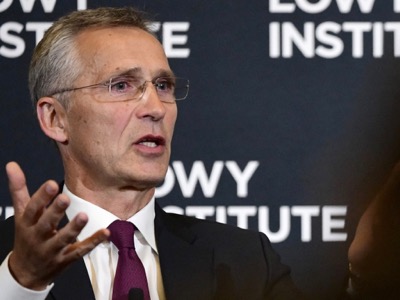
NATO Secretary General Jens Stoltenberg addressed the Lowy Institute in Sydney on August 7, 2019. He stated that it is not NATO that wants to deploy in the Pacific, but China that threatens the Allies there.
The international press only remembered the bursts of voices that preceded it and the giggles that punctuated it at the NATO 70th Anniversary Summit in London. The important thing was obviously elsewhere [1].
When it was created, the function of the Atlantic Alliance was summarized by its Secretary General, Lord Hastings Lionel Ismay, as "Keeping the Soviet Union out, the Americans in, and the Germans down" [2]. As this objective had disappeared with the "homeland of communism", efforts were made to present the Russian Federation as its continuation. Then we accepted the idea of allowing Germany to have its own policy. Finally, consideration was given to extending the Alliance to the Pacific to "contain" China, which has just been confirmed.

Saturday, October 12, 2019

THIERRY MEYSSAN -- Donald Trump, Alone Against All


Donald Trump, Alone Against All

Alone, against his opposition, against his administration and against his allies, President Trump does not seem to be able to fulfil his campaign commitments. Three years after his election, the House of Representatives launched an impeachment procedure against him because he is fighting against the corruption of the Clinton clan.

 | DAMASCUS (SYRIA)  

JPEG - 29.1 kb
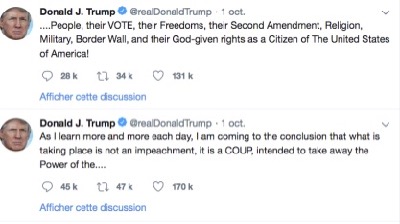
For President Trump, the impeachment proceedings brought by the House of Representatives are an attempt at a coup d’état.
Donald Trump’s main campaign commitment to end the offensive Rumsfeld/Cebrowski military strategy and replace it with a policy of Jacksonian cooperation is met with strong internal US and external opposition from US allies. More than ever, the President appears alone, absolutely alone, in the face of the transatlantic political class.

It was all a foregone conclusion

As with his predecessor, Barack Obama, everything seemed to be a set up. Upon his election in 2009, Obama was hailed as the "first black president of the United States" and then proved unable to solve the problems of this community, leaving police violence against them to reach new heights. In the early days of his term, the Nobel Committee awarded him the Peace Prize for his efforts "for a world without nuclear weapons"; a subject he immediately stopped addressing. Although his record is the exact opposite of his campaign promises, he is still popular around the world. It does not matter if jobs are relocated to China, Guantánamo continues, thousands of targeted killings are carried out, or Libya is destroyed.
Conversely, as soon as he was elected and even before the transfer of power in 2017, Donald Trump was presented as a manic-depressive narcissist, a weak and authoritarian personality, a crypto-fascist. As soon as he joined the White House, the press called for his physical murder and the Democratic Party accused him of being a Russian spy. It obtained that an investigation be opened against him and his team with a view to his dismissal. His chief advisor, General Michael Flynn, was forced to resign 24 days after his appointment and then arrested. When Donald Trump lost the mid-term (November 2018) elections to the House of Representatives, he was forced to negotiate with some of his opponents. He reached an agreement with the Pentagon, allowing certain military actions as long as they did not involve the country in a spiral, and in exchange obtained the closure of the Russian investigation. For eight months, he tried to force march to stop the annihilation of the Great Middle East and preparations for the destruction of the Caribbean Basin. He hoped to be able to announce the realization of peace at the United Nations General Assembly. Crash! The same day, the USIP (alter ego of the NED, but for the Department of Defense), submitted its report on Syria, advising to relaunch the war. And, again on the same day, the Speaker of the House of Representatives, Nancy Pelosi, announced the opening of impeachment proceedings against him, this time in connection with his fight with the Ukrainian authorities against the corruption of the Clinton clan.

Saturday, June 22, 2019

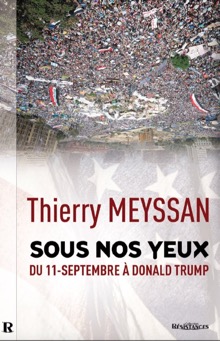
THIERRY MEYSSAN -- SOUS NOS YEUX


Sous nos yeux

Nous commençons la publication par épisode du livre de Thierry Meyssan, Sous nos yeux. Il s’agit d’une écriture ambitieuse de l’Histoire des dix-huit dernières années à partir de l’expérience de l’auteur au service de plusieurs peuples. Ce livre n’a pas d’équivalent et ne peut pas en avoir dans la mesure où aucun autre homme n’a participé à ces événements successifs en Amérique latine, en Afrique et au Moyen-Orient aux côtés des gouvernements mis en cause par les Occidentaux.

 | DAMAS (SYRIE) 


JPEG - 39.7 ko
«  Tous les États doivent s’abstenir d’organiser, d’aider, de fomenter, de financer, d’encourager ou de tolérer des activités armées subversives ou terroristes destinées à changer par la violence le régime d’un autre État ainsi que d’intervenir dans les luttes intestines d’un autre État.  »
Résolution 2625, adoptée le 24 octobre 1970 par l’Assemblée générale des Nations Unies

Avant-propos de l’auteur

Aucune connaissance n’est définitive. L’Histoire, comme toute autre science, est une remise en question de ce que l’on croyait certain et qui, au regard de nouveaux éléments, se trouve modifié, voire infirmé.
Je rejette le choix qui nous est proposé entre le «  cercle de la raison  » et la «  pensée unique  » d’une part, et les émotions et la «  post-vérité  » de l’autre. Je me situe sur un autre plan  : je cherche à séparer les faits des apparences, et la vérité de la communication. Surtout, tant que des hommes tenteront d’en exploiter d’autres, je ne crois pas que les relations internationales puissent être totalement démocratiques et donc transparentes. Par conséquent, au-delà des ruses, il est par nature impossible d’interpréter avec certitude les événements internationaux lorsqu’ils surviennent. La vérité ne peut se faire jour qu’avec le temps. J’accepte l’idée de me tromper sur l’instant, mais je ne renonce jamais à remettre en cause mes impressions et à comprendre. Cet exercice est d’autant plus difficile que le monde souffre de guerres qui nous obligent à nous positionner sans attendre.
Pour ma part, j’ai pris le parti des innocents qui voient des inconnus pénétrer dans leurs villes et y imposer leur loi, des innocents qui entendent les télévisions internationales répéter le mantra selon lequel leurs dirigeants sont des tyrans et qu’ils doivent céder la place aux Occidentaux, des innocents qui refusent de se soumettre et sont alors écrasés par les bombes de l’Otan. Je revendique d’être à la fois un analyste tentant d’observer avec objectivité et un homme portant secours à ceux qui souffrent avec les moyens dont il dispose.

Monday, May 27, 2019

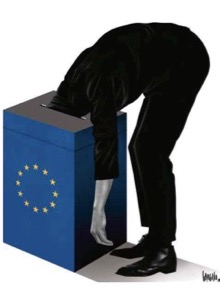
THIERRY MEYSSAN Analyse des élections du Parlement européen


Au lendemain des élections, chaque parti en propose une interprétation qui lui est favorable. Toute lecture objective ne peut que froisser les uns ou les autres. Toutefois, les chiffres ne sont pas discutables.

 | DAMAS (SYRIE)  


JPEG - 15.3 ko
Le résultat des élections du Parlement européen ne correspond pas du tout à ce qui avait été anticipé —y compris par nous—. Cette analyse se fonde sur les résultats provisoires, le lundi 27 mai à 10h GMT.
1— La participation a bondi, par rapport au scrutin précédent de 2014, de 43 à 51 %
Certes, plusieurs États avaient organisé d’autres scrutins le même jour, mais cela n’explique pas ce saut. Plusieurs interprétations sont possibles. La seule chose sûre est que les électeurs considèrent que l’Union —et non pas le Parlement— est un enjeu plus important pour leur avenir que par le passé.
2— Les partis de la Première Guerre froide arrivent en tête au Parlement, mais sont violemment rejetés en France et au Royaume-Uni au profit des libéraux
La situation de ces pays est différente. La France avait déjà amorcé sa mue avec l’élimination de la droite et de la gauche de la Première Guerre froide au 2ème tour de l’élection présidentielle de 2017. Elle confirme la fin des Républicains (8 %) et des Socialistes (6 %).
Le Royaume-Uni répond à une autre logique pour arriver à le même conclusion. Ce pays, dont la culture juridique est totalement différente de celle de l’Union et a façonné celle des États-Unis, avait décidé, sous Barack Obama et en accord avec lui, de quitter l’UE pour rejoindre l’Alena [1]. Mais lorsqu’il vota le Brexit, les États-Unis amorcèrent, avec Donald Trump, leur virage d’une politique impérialiste à une politique jacksonienne. Désemparée, la classe dirigeante britannique ne parvint pas à trouver de nouveaux partenaires et bloqua le Brexit. Les Travaillistes n’obtiennent que 14 % et les Conservateurs 8 %, tandis que les Brexiters les submergent à 31 %.
Ce jeu de massacre profite à l’Alliance des démocrates et des libéraux pour l’Europe (ADLE), représentée en France par La République en marche (22 %) et au Royaume-Uni par les Lib-Dems (18 %).
Si la droite (PPE, 178 sièges) et la gauche (S&D, 149 sièges) restent les principales couleurs au Parlement européen, elles sont talonnées par les Libéraux (ADLE, 111 sièges). Compte tenu des précédents historiques, on peut s’attendre à ce que la France et le Royaume-Uni fassent école dans le reste de l’Union et que, au prochain scrutin, le PPE et les S&D disparaissent au profit des Libéraux.
3— Faible poussée de l’objectif identitaire
L’Italien Matteo Salvini avait l’ambition de fonder une alliance des partis opposés au système. En définitive, il n’a pu regrouper que les partis identitaires autour du rejet commun du modèle anglo-saxon de « société multiculturelle » (c’est-à-dire d’une société morcelée dans laquelle chaque communauté culturelle dispose, non plus des mêmes références nationales, mais de ses propres codes et références).
L’affirmation du modèle de société européenne contre le modèle anglo-saxon deviendra parfaitement compatible avec les institutions de l’Union si le Royaume-Uni réalise son Brexit. C’est tout à fait à tort que l’on présente la coalition de Salvini comme « euro-sceptique » ou « d’extrême-droite ».
En définitive, l’Europe des nations et des libertés (ENL) ne progresse que de 16 %, passant de 50 à 58 sièges sur 751.
4— Échec de l’idée de souveraineté européenne
Tout exposé de la main-mise anglo-saxonne sur l’Union, telle que stipulée par les Traités, ou du caractère européen de la culture russe, ont été relégués hors du champ médiatique. 
Laissons de côté la rhétorique sur l’« Union puissance », face à la Chine, à la Russie et aux USA, que tous savent n’être qu’un propos de tribune. Les électeurs ont compris qu’une Nouvelle Guerre froide se met en place, mais ils considèrent que l’Otan était le meilleur allié durant la Première Guerre froide et qu’ils doivent se positionner à ses côtés durant la Seconde. Cependant l’absence de débat public sur ce thème révèle une mauvaise conscience, comme s’ils pensaient leur choix à la fois prudent et lâche.
5— En Allemagne et en France, substitution de buts de la « société civile » aux questions politiques
L’expression anglo-saxonne « société civile » désigne des associations qui, de part leur statut, ne sont pas associées à la politique, mais défendent d’autres causes. C’est très exactement le cas des questions environnementales, qui sont souvent transnationales, mais toujours subordonnées aux questions politiques. Ainsi, même si l’on supprimait toutes les voitures et tous les camions dans l’Union, la baisse de Co2 serait infime par rapport à la quantité produite par les bateaux et les avions nécessaires à la globalisation économique. Ou encore, même si l’on protégeait, non pas dans l’Union, mais dans le monde, toutes les espèces en voie de disparition, cela ne préserverait pas la biodiversité détruite par les guerres. D’ailleurs, en situation de guerre, toutes les réglementations environnementales seraient oubliées. 
La poussée des Verts, en Allemagne (20 %) et en France (13 %), traduit donc une impuissance des électeurs en matière politique. Puisqu’on ne peut agir contre l’impérialisme et la globalisation économique, rendons-nous utiles d’une autre manière.
Les forces se mettent en place pour la Nouvelle Guerre froide.
[1The Impact on the U.S. Economy of Including the United Kingdom in a Free Trade Arrangement With the United States, Canada, and Mexico, United States International Trade Commission, 2000.

Saturday, April 27, 2019

THIERRY MEYSSAN -- L’enjeu caché de la restauration de Notre-Dame


L’enjeu caché de la restauration de Notre-Dame

L’Élysée a utilisé l’incendie de Notre-Dame de Paris pour mener à bien un projet qui dormait dans les cartons. Il a fixé des règles inédites, hors des procédures d’appel d’offres et de respect du patrimoine non pas pour restaurer la cathédrale, mais pour transformer l’île de la Cité en premier lieu touristique d’Europe à la veille des Jeux olympiques de 2024 et de l’Exposition universelle de 2025. Pour éviter les contraintes judiciaires, il a arbitrairement imposé l’hypothèse d’un sinistre de chantier.

 | DAMAS (SYRIE)  

JPEG - 30.3 ko

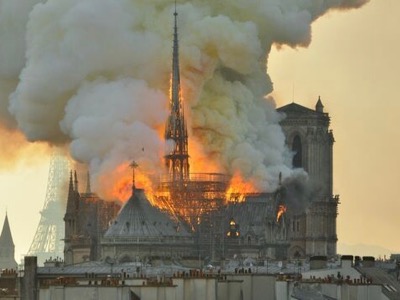
L’incendie de la cathédrale Notre-Dame

Lorsque l’incendie de Notre-Dame a débuté, le 15 avril 2019 au soir, tous les médias français et beaucoup d’étrangers, se sont tournés vers la cathédrale en feu. De nombreuses télévisions étrangères ont débuté leur journal par cette nouvelle, mais pas France2.
La chaîne publique avait prévu de le consacrer au discours annoncé du président Macron concluant le « Grand débat national ». La rédaction, complétement sonnée par l’émoi provoqué par ce drame imprévu, y consacra son journal, non sans avoir au préalable regretté que le président reporte son discours sine die ; un discours à ses yeux beaucoup plus important.
La froideur de la plupart des journalistes et la stupidité des commentaires à chaud des politiques ont soudainement montré le gouffre béant qui sépare leur univers mental de celui des Français. Pour la classe dirigeante, la beauté de Notre-Dame ne saurait faire oublier que c’est un monument de la superstition chrétienne. Au contraire, pour le public, c’est le lieu où les Français se réunissent en tant que peuple pour se recueillir ou rendre grâce à Dieu.

Tuesday, December 4, 2018

THIERRY MEYSSAN -- How the West eats its children

How the West eats its children

For Thierry Meyssan, by taking to the streets, the French have become the first Western population to take personal risks to oppose financial globalisation. Although they do not realise it, and still imagine that their problems are exclusively national, their enemy is the same force that crushed the region of the African Great Lakes and a part of the Greater Middle East. In order to understand the project which inextricably unites these apparently disparate events, we have to take a step back.
 | DAMASCUS (SYRIA)  
JPEG - 55.6 kb

The cause of Western recession

International relations experienced a profound change with the paralysis of the Soviet Union in 1986, when the State was unable to control the civilian nuclear incident in Tchernobyl [1], then with the revocation of the Warsaw Pact in 1989, when the East German Communist Party [2] destroyed the Berlin Wall, and finally, with the dissolution of the USSR in 1991.
At that time, the President of the United States, George Bush Sr., decided to demobilise one million soldiers and devote the efforts of his country to its own prosperity. He wanted to transform US hegemony within its zone of influence, and expand it into that of the leader of the world, the guarantor of world stability. With that, he laid the foundations for a « New World Order », first of all in the speech he gave side by side with British Prime Minister Margaret Thatcher, at the Aspen Institute (2 August 1990), then during his speech to Congress (11 September 1990), announcing operation « Desert Storm » [3].

Tuesday, September 25, 2018

THIERRY MEYSSAN -- Will London, Paris, and Tel-Aviv be sanctioned by Moscow and Washington?

Will London, Paris, and Tel-Aviv be sanctioned by Moscow and Washington?

The confrontation which recently occurred in Lattakia may result in a complete global redistribution of the cards. There are two reasons for this, the second of which is being hidden from the Western world. First of all, it cost the lives of 15 Russian soldiers; secondly, it not only implicates Israël, but also the United Kingdom and France. This is potentially the most dangerous crisis in more than 60 years. We now have to find out whether President Trump, currently in the middle of his election campaign, is capable of supporting his Russian counterpart, in order that the United States and Russia may sanction the colonial powers as they did in 1956, during the Suez crisis.
 | DAMASCUS (SYRIA)  
JPEG - 47.4 kb
Moscow, 20 September 2018 - the Chief of Staff for the Israëli Air Force, General Amikam Norkin, arrives in a hurry to present his version of events. Once these proofs were checked and compared with other recordings, it transpired that Israël was lying straight-faced.
On 17 September 2018, France, Israël and the United Kingdom carried out a joint operation against Syrian targets. During the brief moments of combat, a Russian reconnaissance plane was brought down by Syrian ’friendly fire’. Study of the recordings shows that an Israëli F-16 had flown hidden behind the Ilyushin Il-20 in order to confuse the Syrian Air Defences.
The destruction of a Russian military aircraft by the fault of Israël, during a joint operation by the United Kingdom, France and Israël, caused consternation in all the chancelleries. Since the start of hostilities in Syria seven years ago, if there were a ’red line’, it was that the different protagonists should never endanger Russian, US, or Israëli forces.
We are sure about very little of what actually happened, except that :
- a British Torpedo took off from Cyprus to land in Iraq. During the flight, it violated Syrian air space in order to scan the Syrian defences and make the allied attack possible.
- less than an hour later, four Israëli F-16s and a French frigate, L’Auvergne, fired on targets in the Syrian governorate of Lattakia. The Syrian air defences protected their country by firing their S-200s against the French and Israëli missiles.
- During the battle, an F-16 used a Russian Ilyushin Il-20 as a shield. The Ilyushin was flying a surveillance mission over the area, localising jihadist drone launch sites. The Syrian defences fired a missile, aiming for the thermal signal of the Israëli aircraft. Theoretically, therefore, it could have destroyed the Russian plane by mistake.
This is, however, implausible, because S-200 missiles are equipped with a reconnaissance system able to distinguish between friendly and enemy targets, which the Russian Minister for Defence successively confirmed, then denied. In any case, the Ilyushin was destroyed, without our knowing for certain how, or by whom.
The cowardice of the British and French leaders led them to censor all information concerning their responsibility in this operation. London made no comment, and Paris denied the facts. Neither the BBC, nor France-Television dared to mention the subject. For these two countries, more than ever, the reality of external politics is excluded from the democratic debate.

Immediate interpretation of the events

We do not know if the destruction of the Russian aircraft (causing the death of the 15 men on board) can be blamed on the Israëli pilot - which seems highly unlikely - on the Israëli army, or on the alliance which carried out the attack.
On the answer to this question hangs the possibility of conflict between four nuclear powers. The situation is therefore extremely serious. It has no precedent since the creation of the Russian Federation, at the end of 1991.
The British-French-Israëli aggression is the response by these three countries to the Russian-Turkish agreement signed only a few hours earlier at Sotchi. It came into play after the US refusal, at the beginning of September, to bomb Syria under false pretences, and the sending of a US delegation into the Arab world in order to express its disagreement with the British-French initiatives [1].
The Sotchi agreements were signed by Turkey under intense pressure from Russia. In Teheran, President Recep Tayyip Erdoğan had refused to sign the Memorandum concerning the withdrawal of the jihadist and Turkish forces in Idlib. This had not pleased President Vladimir Putin, who answered first of all by reaffirming the sovereignty and territorial integrity of Syria [2] and, furthermore, by underlining for the first time the illegitimacy, under international law, of the Turkish military presence in the country. Ten days later, a very unsettled Mr, Erdoğan accepted an invitation to Russia.
The Sotchi agreement, while distancing Turkey a little further from NATO with its energy contracts, forced Ankara de facto to withdraw from a part of the territory that it occupies, allegedly to better protect the pseudo-« rebels » gathered in the governorate of Idlib [3]. Besides this, Turkey only has one month in which to confiscate the heavy weaponry of its friends from Al-Qaïda and Daesh in the demilitarised zone [4].
This agreement was obviously unacceptable for London, Paris and Tel-Aviv :
- in the end, it plans for the disappearance of the jihadists as an army, while London has been supervising, training and manipulating them for decades [5] ;
- the end of the dream of a French mandate over Syria and of the creation of a new French colony in the North of the country, under the phoney name of Kurdistan (Kurdistan is legitimate only within the frontiers which were recognised by the Sèvres Conference, in 1920.) In other words, not in Iran, nor Iraq or Syria, but only in what is now known as Turkey [6]).
- the end of the regional domination of Israël, faced with a stable Syria under Russian protection.

Mid-term interpretation of the events

The British-French-Israëli military alliance has not entered into action since the Suez Canal crisis in 1956. At that time, Anthony Eden, Guy Mollet and David Ben Gourion joined their forces in order to humiliate the Arab nationalists, particularly the Egyptian Gamal Abdel Nasser, and to re-establish the British and French colonial empires (« Operation Musketeer »).
This is exactly what happened with this new attack : as was confirmed by the Secretary General of Hezbollah, Hassan Nasrallah, none of the targets under attack were linked in any way to Iran or Hezbollah. This British-French-Israëli action had nothing to do with the international struggle against the jihadists in general and Daesh in particular. It also had no connection with the overthrow of the Syrian Arab Republic or its President, Bachar el-Assad. Its main objective was to kill military scientists, in particular the rocket specialists from the Institute of Technical Industries in Lattakia.
This is therefore the resumption and continuation of the policy of targeted assassinations waged by Israël for the last twenty years, successively against the Iraqi, Iranian, and now Syrian scientists. It is one of the pillars of colonial policy : to prevent the submitted populations from attaining the same level of education as their masters. In former times, the Westerners forbade their slaves from learning to read under pain of death. Today, they eliminate their scientists.This policy was relaunched with the British-French-US bombing of 14 April 2018, in which the only target destroyed was the Scientific Research Centre in Barzeh [7], then with the breakdown of the 5+1 agreement with Iran (JCPoA) which forced the country to close its nuclear physics faculties (May 8, 2018).
It was a joint initiative : the jihadists destroy the past, the Westerners destroy the future.

Long-term interpretation of the events

Since the deployment of Russian troops in Syria, on 13 September 2015, to help Syria in its fight against the terrorists, the allies of the United States have understood the impossibility of carrying out the US plan without risking a world war. With the arrival of Donald Trump at the White House, they have progressively questioned their war objectives, abandoned the plans of the « Friends of Syria » and fallen back on their respective historical strategies [8].
It is this logic that led them to reform the alliance which provoked the Suez crisis, and it is this same logic which pushed Germany to distance itself from them.
At the beginning of the First World War, the British, French and Russian empires decided on the partition of the world which they would implement as soon as they had gained victory. The treaty was negotiated by Mark Sykes, Georges Picot and Sergueï Sazonov. During the course of the World War, however, the Tsar was overthrown by the Bolcheviks, which meant that the areas of the world originally reserved for the Russian empire were once again up for grabs. Finally, at the end of the World War, only the part of the plan relative to the Middle East was applied, under the name of the « Sykes-Picot » agreement.
The return of Russia to the international game obviously brings into question the British-French colonial sharing of the Middle East. The foreseeable clash has just occurred, either accidentally or deliberately, with the destruction of the Ilyushin Il-20 during the joint British-French-Israëli military operation.

How to react

The bewilderment of the international community in the face of this brutal awakening of a century-old conflict can be measured by the Twitter silence from the White House.
During the Suez crisis, the Israëli troops engaged were twice as numerous as all the British and French forces together. The total number of coalition forces was about 250,000 men. This was therefore a very large-scale operation compared to that of Lattakia. But it remains true that the two sequences work from the same diplomatic logic, and may lead to the same developments.
During the Suez crisis, in the middle of the Cold War, the Soviet Union threatened the United Kingdom, France, and Israël with a nuclear riposte if they refused to withdraw from Egypt. At first, NATO supported the Europeans in threatening Moscow with a World War, before changing its mind. In the middle of the Cold War, therefore, the United States temporarily supported the USSR in order to halt the European folly.
For Washington, allowing the Europeans to pursue their plans was the equivalent of pushing all the Arab nations into the arms of the Soviets. Apart from that, it simply was not feasible to accept the French-British intervention at the same time as they were denouncing the repression of the Hungarian revolution by the Warsaw Pact.
President Dwight D. Eisenhower and Vice-President Richard Nixon launched a monetary attack against the pound sterling, sent their naval and airborne forces to interfere with the British-French-Israëli complex, and forbade the use of French military material financed by US funds.
International peace was preserved thanks to certain third parties such as the Secretary General of the UNO, Dag Hammarskjöld (who was assassinated three years later, and was posthumously awarded the Nobel Peace Prize); the Canadian Minister for Foreign Affairs Lester B. Pearson (who also received the Nobel Peace Prize); and the leader of the non-aligned nations and Prime Minister of India, Jawaharlal Nehru.
The Suez crisis profoundly upset not only international political life, but also the national reality of the United Kingdom, France and Israël.
- Circumventing the European vetos at the Security Council, the UNO General Assembly called for the withdrawal of the invaders and created the first United Nations intervention force.
- In the United Kingdom, the House of Commons demanded the end of colonial politics to the profit of the promotion of the economic interests of London via the Commonwealth.
- In France, the Communists, the Gaullists and the Poujadists (including Jean-Marie Le Pen) united against the Centrists and the Socialists; a configuration that has never been seen since. Six years later, President De Gaulle considered that by recognising the independence of Algeria, he would put an end to military collaboration with the colonial state of Israël and restore the policy of friendship and collaboration with the Arab peoples, which had always characterised France, apart from its colonial period [9].
The position of the Western powers concerning the aggression on Lattakia is all the more difficult because, in violation of their agreement with Russia, the Israëlis only informed Moscow of their operation a long time after it had begun, and only one minute before they began firing. As for the Pentagon, they affirmed that they had not been warned at all. But let us not forget that the Israëli-Russian mutual non-aggression pact in Syria only exists because Israël is the US arsenal for the Middle East, housing (with Italy) the stocks of US weaponry for the entire region. If Israël truly did not inform the Pentagon of its actions in advance, then it can not benefit from US protection, and consequently the mutual non-aggression pact may be called into question by Russia.
The Russian response depends on the position of the White House, which we do not know for the moment. It must be guided by a desire to lessen tension, if possible, and also to maintain dissuasion by punishing the guilty party or parties as soon as the Kremlin names them. It is not necessary for Russia to make this sanction public as long as the chancelleries concerned are informed.

The Russian response

Russia has the choice of seeing in the destruction of their aircraft nothing more than a mistake by an Israeli pilot, or by the Israëli army, or again, by all three of the states implicated (the United Kingdom, France and Israël). The Russian Minister for Defence, Sergueï Choïgou, telephoned his Israëli counterpart, Avigdor Lieberman to inform him that he held Israël responsible for the accident, and reserved the right to riposte. A little later, President Putin declared « This is a series of tragic events, because our plane was not shot down by an Israëli aircraft ». He was careful to distinguish this situation from that of the deliberate destruction of a Sukhoï 24-M by Turkish fighters in November 2015. We are therefore heading towards the public designation of Israël as the sole responsible and a secret sanction against the three states involved.
The Israëli chargé d’affaires in Moscow, Keren Cohen Gat, was summoned by the Minister of Foreign Affairs, while in a knee-jerk reaction, Israëli Prime Minister Benjamin Netanyahu attempted to shovel the responsibility for the accident onto Iran. An Israëli delegation, led by the Chief of Staff of the Air Force, General Amikam Norkin, rushed off to Moscow with unprecedented haste. They contested the claims of the Russian Minister for Defence, affirmed that Israël was innocent, and that all the blame belonged to the negligence of the Syrians.
President Donald Trump, a great admirer of Richard Nixon’s foreign policy, was thus provided with the perfect occasion to finish with the British-French-Israëli support for the US deep state. However, in the middle of his election campaign, he can not afford to give the impression of supporting the Russian rival while he beats up his allies. He is, therefore, seeking a way of presenting his internal public with this major change of direction. From this perspective, during an interview with Hill TV, he condemned the US engagement in the Greater Middle East which was decided by his predecessor George Bush Jr after the attacks of 11 September 2001.
On 23 September, the spokesman for the Russian Ministry of Defence, General Igor Konashenkov, presented the synthesis of Russian intelligence and the information transmitted by Syria and Israël.
- He accused the Hebrew state of having deliberately violated the mutual non-aggression agreement of 2015 by not giving Russia advance notice of its attack and by lying about its targets.
- He accused it of having endangered civilian flights present in this zone of the Mediterranean, and of being responsible for the destruction of the Ilyuchin Il-20.
- He denounced its non-assistance to the Russian soldiers when their plane stalled.
- He also accused General Amikam Norkin of lying by pretending that the Israëli jets had already returned to Israël when the Russian plane stalled and crashed.
- Finally, he deflected the accusations of amateurism laid at the door of the Syrian Anti-Air Defence System.
However, he abstained from publicly blaming the United Kingdom and France, who were nonetheless just as concerned by his remarks against Israël.
In case the White House should find an acceptable narrative of the facts for its electors, Russia could forbid the United Kingdom, France and Israël from making any intrusion into the maritime, terrestrial and aerial space of Syria without the authorisation of Damascus. London and Paris would have to cease their threats of bombing under whatever pretext at all (false chemical weapons) and withdraw their special forces. This measure would be valid for all protagonists in general, except for the United States and, in Idlib, for Turkey.
Translation
Pete Kimberley

The President of Russia delivered the Address to the Federal Assembly. The ceremony took place at the Manezh Central Exhibition Hall.

January 15, 2020

ERDOGAN

MANLIO

State of the Nation

PISA BOOK FESTIVAL


Imagem

PT -- VLADIMIR PUTIN na Sessão plenária do Fórum Económico Oriental

Excertos da transcrição da sessão plenária do Fórum Económico Oriental

índice


“Copyright Zambon Editore”

PORTUGUÊS

GUERRA NUCLEAR: O DIA ANTERIOR

De Hiroshima até hoje: Quem e como nos conduzem à catástrofe

ÍNDICE

me>

FOX NEWS

TRIBUTE TO A PRESIDENT


NA PRMEIRA PESSOA

Um auto retrato surpreendentemente sincero do Presidente da Rússia, Vladimir Putin

CONTEÚDO

Prefácio

Personagens Principais em 'Na Primeira Pessoa'

Parte Um: O Filho

Parte Dois: O Estudante

Parte Três: O Estudante Universitário

Parte Quatro: O Jovem especialista

Parte Cinco: O Espia

Parte Seis: O Democráta

Parte Sete: O Burocrata

Parte Oito: O Homem de Família

Parte Nove: O Político

Apêndice: A Rússia na Viragem do Milénio


Pigeon's comment: I'm very lucky to have the chance to meet my leader
 ...


Daniele Ganser

Açores


Subtitled in EN/PT

Click upon the small wheel at the right side of the video and choose your language.


xmas


“Glory to God in the highest,

and on Earth

Peace, Good Will toward men.”

This Christmas, Give Peace