A Cult, a Fake Gov't & US-funded NGOs Hold Panels Panning China
Plus the bizarre story of Human Rights Watch's China Director's intro to activism.
 |
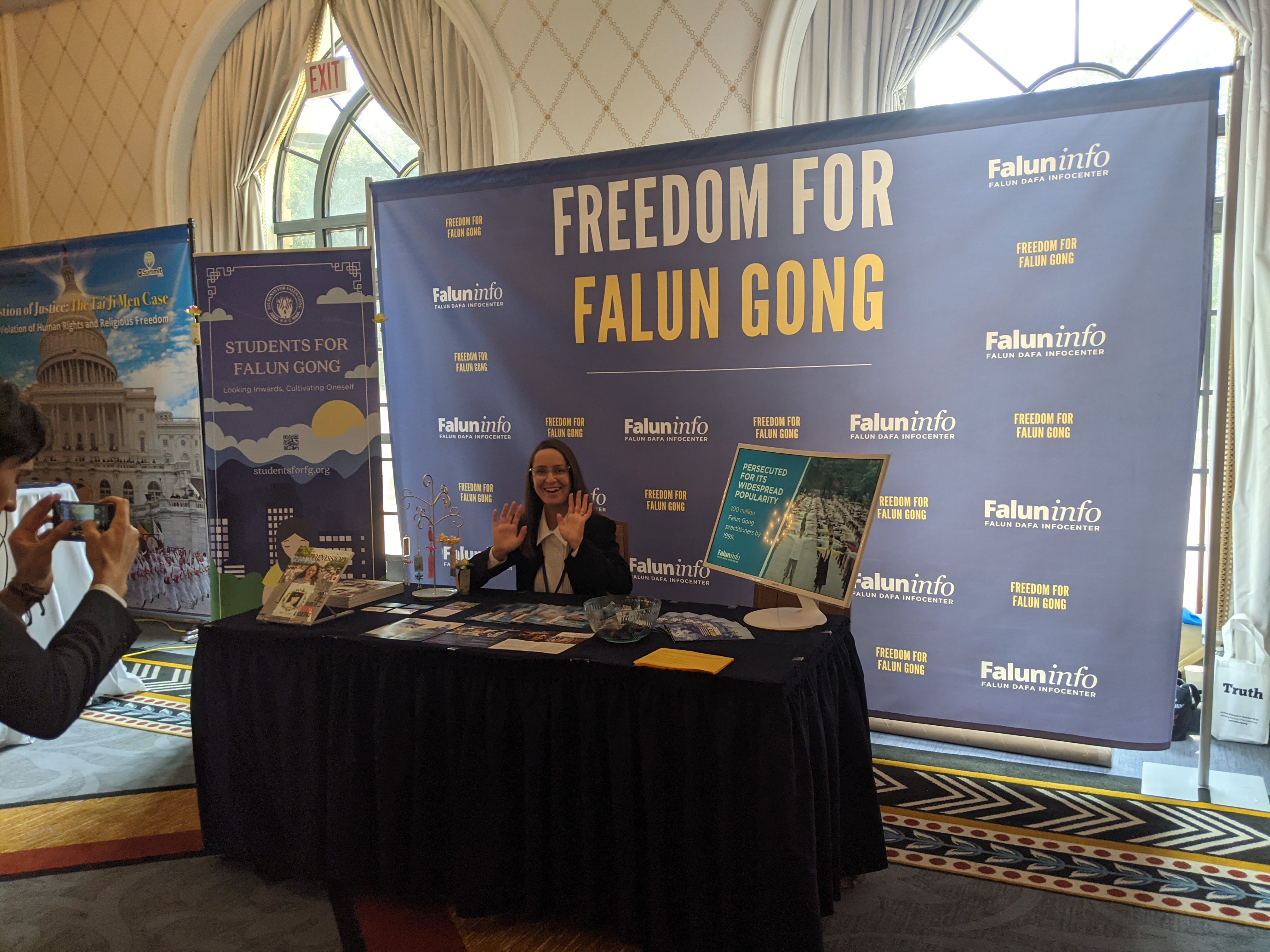
This is part two of a three-part investigation into the IRF Summit. The first part is available here.
My experience attending panels at the three-day IRF Summit in Washington, DC was limited to ones focusing on the alleged crimes of China, which I believed were the most interesting from a geopolitical perspective. Heavily involved in these events were organizations and individuals with close links to the US government, some having worked for it, as well as powerful think tanks, human rights NGOs and foreign separatist movements. One fugitive who spoke on a panel had previously served as a spokesman for a now-defunct separatist group that included in its ranks a man who plead guilty to harboring explosives.
Meanwhile, an official of the Central Tibetan Administration spoke candidly about the goals of Congress in pushing for a US consulate in Tibet.
In all, the IRF Summit featured 35 roughly one-hour “concurrent breakout sessions,” of which seven were about China, accounting for one-in-five of them. Additionally, much of the “plenary sessions,” which went on much longer and were hosted in the metal detector-protected Regency Ballroom, focused substantially on China.
Breakout sessions focused on China included “Forced Organ Harvesting and Global Impact,” “Boycotting the Beijing Olympics,” “Chen Guangcheng Speaks about Religious Freedom in China,” “China’s Criminalization of Islam in East Turkestan: The Policy Agenda,” “Religious Freedom and Rule of Law Under Xi Jinping,” “Persecution of Tibetans’ Religious Freedom,” and “Taiwan: A Leading Voice for Religious Freedom.”




/https://www.niagarafallsreview.ca/content/dam/thestar/news/canada/2021/09/25/huawei-executive-meng-wanzhou-receives-warm-welcome-upon-return-to-china/_1_meng_wanzhou_2.jpg)